I am an AI and create your individual experience - answer the following questions:
- freely accessible at any time
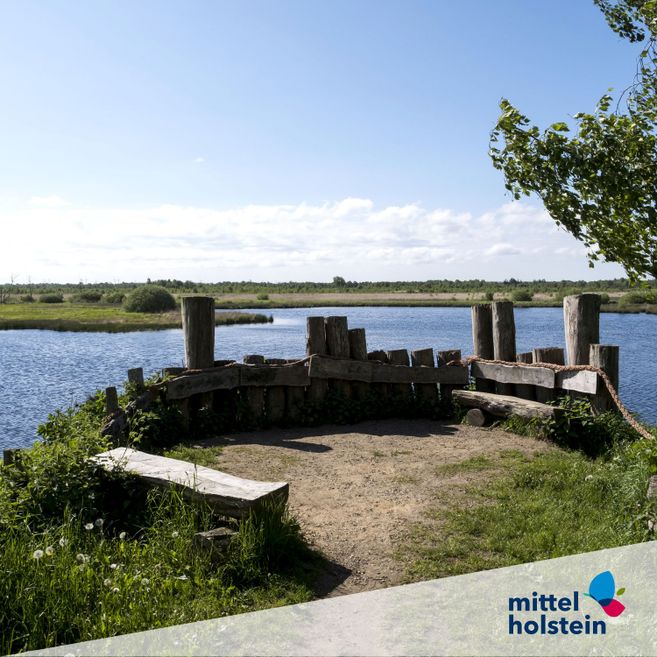
With its extensive bog and green area, the landscape enchants on an area of about 500 hectares. About 200 hectares of the original bog area could be renaturalized in the course of the last 40 years. As a result of the post-glacial sea level rise of the North Sea on soft-sea-ice-age outwash plains in the edge position of the young moraine to the Geest, the moor was formed. About 5700 years ago, during the Atlantic, a post-glacial warm period, the bog growth began on a water-impermeable sand layer between Jevenau and Wehrau. It spread over an area of about 900 hectares until the 19th century. After this period, the cultivation of the bog began, of which about 300 hectares of bog excavated by peat cutting remained around 1970. The association Unabhängiges Kuratorium Landschaft Schleswig-Holstein (Independent Curatorship Landscape Schleswig-Holstein) carried out step-by-step measures for the rewetting and renaturation of the Wild Moor from 1978 onwards. The "Wild Moor" belongs to the group of raised bogs. In the non-renaturalized areas, mainly bracken, birch and moor grass grow. Today the renaturation area of the Wild Moor covers about 175 hectares. Woolgrass-peat moss communities have spread extensively in the renaturation area since 1978 as a result of the waterlogging. The Wild Moor also provides a diverse habitat for wildlife. There are 26 species of dragonflies, 11 species of grasshoppers, as well as wood lizards and about 54 species of breeding birds. A beautiful circular path leads through the moor. You have a wide view over the almost tree-free areas from the lookout hill.